Thursday, February 26, 2026
Home Politics

Politics

Indian political updates, elections, government decisions, party announcements, policy changes and leadership news. Deep insights into national and regional politics that shape the country.

“Emmanuel Macron Leaves Mumbai After 2-Day India Visit”

mumbai

Emmanuel Macron Leaves Mumbai After 2-Day India Visit

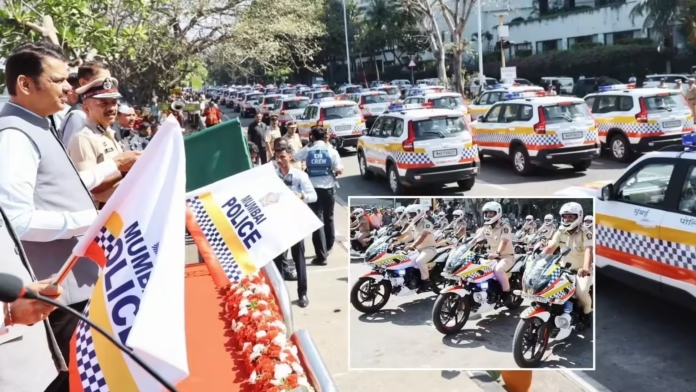
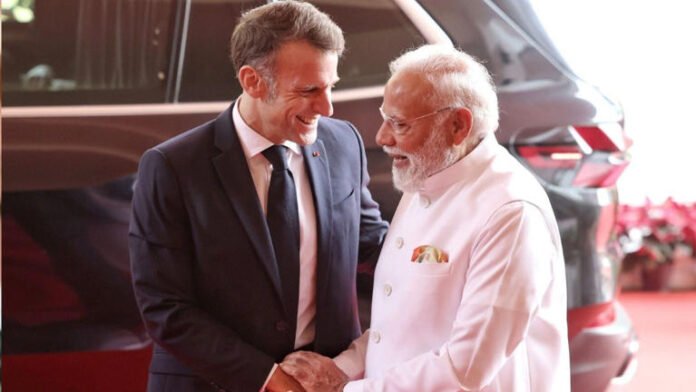
Mumbai — French President Emmanuel Macron departed from Mumbai after concluding his two-day visit to India, marking the end of a high-profile diplomatic engagement focused on strengthening bilateral ties.

During the visit, President Macron participated in official meetings and strategic discussions aimed at boosting cooperation in areas such as defense, trade, clean energy, and technology. He also attended cultural and business events in Mumbai, highlighting growing economic collaboration between India and France.

Officials described the visit as significant in reinforcing the strategic partnership between the two nations. Key discussions reportedly revolved around expanding investment opportunities and deepening collaboration in the Indo-Pacific region.

Security arrangements were heightened across Mumbai during the French President’s stay, with multiple high-level engagements held under tight protocol.

The visit is being seen as another step toward enhancing diplomatic and economic relations between India and France.

Further details regarding agreements or joint statements are expected from official sources.

— Reported by Anam Siddiqui


“Raghav Chadha: Public should have right to fire leaders”

0
raghav chadha

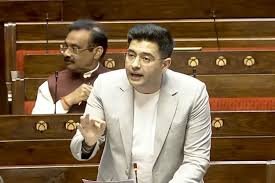
Public Should Have Right to Fire Leaders”: Raghav Chadha

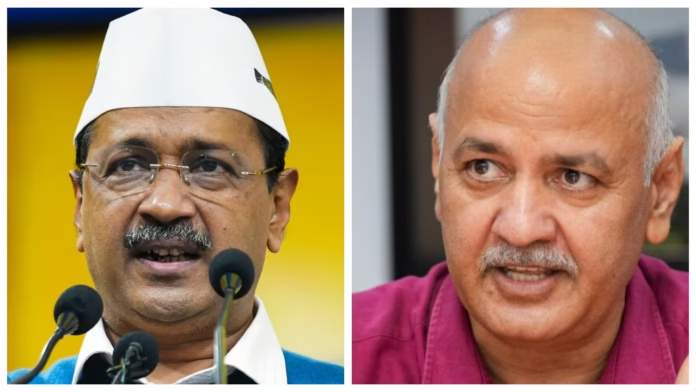
New Delhi — Aam Aadmi Party (AAP) leader Raghav Chadha has sparked fresh political debate after stating that the public should have the right to “fire” elected representatives who fail to perform.

Speaking at a public interaction, Chadha emphasized the need for greater accountability in democratic systems. He argued that voters should not have to wait for the next election cycle to express dissatisfaction with non-performing leaders. “In a true democracy, the ultimate power rests with the people. Citizens should have mechanisms to hold their representatives accountable in real time,” he said.

The remarks have ignited reactions across political circles. Supporters of the proposal described it as a progressive idea aimed at strengthening democracy and transparency. Critics, however, questioned the practicality and constitutional implications of such a mechanism.

Political analysts noted that the concept resembles the idea of a “right to recall,” which has been debated in various parts of India but is not widely implemented at higher levels of governance.

So far, no formal legislative proposal has been introduced, but the statement has added momentum to discussions around political accountability and electoral reforms.

Further reactions from other parties are expected in the coming days.

— Reported by Neha Jaiswal


“Raghav Chadha: Public should have right to fire leaders”

0
raghav chadha
raghav chadha

“Public Should Have Right to Fire Leaders” — Raghav Chadha’s Challenge Goes Beyond Elections

Reported by Neha Jaiswal

New Delhi, India — In a notable push for democratic reform, Aam Aadmi Party (AAP) MP Raghav Chadha has called for a fundamental change in India’s political accountability framework by urging that the public should not only have the power to elect their leaders but also the right to remove them mid-term if they fail to perform.

Speaking during the ongoing Budget Session of Parliament, Chadha articulated this idea while advocating for what he described as a “Right to Recall” — a mechanism that would allow voters to “fire” an elected representative before the end of their five-year term. “If voters can hire a leader, they should also have the right to fire them,” he emphasised, noting that accountability must not end with casting a vote.

What Is Right to Recall?

Under Chadha’s proposal, the Right to Recall would enable citizens to initiate a process to remove an MP or MLA whose performance they find unsatisfactory. Currently, Indian voters must wait for the next election cycle to express discontent, even if their representative consistently underperforms or neglects duties. Chadha questioned this status quo, asserting that no other profession allows someone to remain in a role without consequences for continuous non-performance for five years.

He pointed to other democracies where recall provisions exist, arguing that such a mechanism would incentivise elected leaders to remain responsive and accountable throughout their tenure. According to Chadha, more than two dozen countries — including the United States and Switzerland — have some form of recall mechanism.

Safeguards to Prevent Misuse

To prevent hasty or politically motivated recalls, Chadha proposed several safeguards:

  • A minimum period after an election (such as an 18-month cooling period) before a recall can be triggered.

  • A verified petition supported by at least 35–40 % of voters to initiate the recall process.

  • The recall would be limited to cases of serious misconduct, proven corruption, fraud or significant neglect of duty.

  • A final recall vote would need more than 50 % voter backing to successfully remove the representative.

These provisions aim to ensure that the tool is used judiciously rather than as a means of settling everyday political disagreements.

Political Response and Debate

Chadha’s remarks have sparked reactions across the political spectrum. Supporters of the proposal argue that introducing a Right to Recall would strengthen democratic oversight and ensure that elected officials do not “disappear” once polls are over. Many see this as a way to bring greater accountability and responsiveness to public service.

However, some critics within Parliament have cautioned that such a system could lead to instability or frequent disruptions if not carefully implemented. They question whether recall mechanisms might be exploited by political rivals or lead to prolonged campaign cycles.

Looking Forward

Chadha’s call for the Right to Recall has reignited discussion about democratic reforms in India. Whether this proposal will translate into legislation or become part of broader electoral reform debates remains to be seen. What is clear is that his advocacy has put the spotlight on how accountability could evolve in India’s parliamentary system — suggesting that the public’s role in governance might stretch beyond just voting every five years.

“Privilege Motion Lao ya FIR” – Rahul Gandhi ka Sarkar ko Open Challenge.

0
rahul gandhi 13.2.26

“Privilege Motion Lao ya FIR” – Rahul Gandhi ka Sarkar ko Open Challenge

Reported by Anam Siddiqui

New Delhi, India — In a sharp escalation of the ongoing political tussle in Parliament, Rahul Gandhi, the Leader of the Opposition in the Lok Sabha, has publicly dared the Centre to take action against him — whether by filing a First Information Report (FIR) or bringing a Privilege Motion — as he vowed to continue his fight for farmers’ rights.

This bold challenge from Gandhi came amid heightened tensions following his criticism of the recently announced India–United States interim trade agreement, which he described as harmful to Indian farmers’ livelihoods and national food security. In a video message and social media posts, Gandhi asserted, “FIR ho, mukadma darj ho ya Privilege prastaav laayein — main kisano ke liye ladunga” (Whether an FIR is filed, a case is registered, or a privilege motion is brought — I will fight for the farmers).

Gandhi’s Accusations and Defiance

Gandhi’s statement was a direct response to persistent demands from some members of the ruling party — particularly Nishikant Dubey — and government ministers who have accused him of misleading Parliament with “baseless allegations”. Dubey had submitted a notice seeking a substantive motion against Gandhi, arguing that his remarks were defamatory and in breach of parliamentary privilege. However, this notice has not been formally recognised as a government-led Privilege Motion.

In his fiery social media post, Gandhi accused the Narendra Modi government of being “anti-farmer” and “selling” Indian agriculture interests to foreign powers. He claimed the interim trade pact undermined protections for Indian crops and threatened farmers’ livelihoods — assertions strongly rejected by government ministers.

Government’s Position and Parliamentary Dynamics

Union Parliamentary Affairs Minister Kiren Rijiju clarified that the government has decided not to introduce its own Privilege Motion against Gandhi, as the notice brought by a private member is being considered. The Speaker of the Lok Sabha will determine whether the matter should go to the Privilege Committee or Ethics Committee.

Despite the political heat, Rijiju’s remarks suggest that formal parliamentary action — such as a privilege reference — remains uncertain, and parliamentary decorum and procedure will play a key role in how the situation unfolds.

Reactions Across the Political Spectrum

Supporters of Gandhi say his defiance resonates with farmers and critics of the trade deal who fear adverse impacts on food security and domestic agriculture. This comes amid wider political debates over foreign engagement, economic policy, and the role of opposition voices in Parliament.

On the other hand, members of the ruling party have accused Gandhi of irresponsible rhetoric, alleging that his comments could damage India’s international standing and mislead the public — charges he and his party vehemently reject.

As the standoff continues, Gandhi has made it clear that neither FIR threats nor parliamentary privilege actions will deter him from raising farmers’ issues and holding the government accountable in both Parliament and public forums.

Syed Iqbal Elected Parbhani Mayor with Congress Backing.

0
ikbal image


Syed Iqbal Elected Parbhani Mayor with Congress Backing

Reported by Anam Siddiqui

Parbhani, Maharashtra — In a closely watched civic poll development, Syed Iqbal Syed Khwaja of the Shiv Sena (UBT) was elected Mayor of Parbhani Municipal Corporation on Thursday, securing the post with crucial support from the Indian National Congress in a contest that highlighted shifting political dynamics in central Maharashtra.

Iqbal, a first-time corporator, defeated the Bharatiya Janata Party’s (BJP) candidate Tirumala Khilare by 13 votes in a vote among members of the 65-member Parbhani Municipal Corporation. He received 39 votes compared with Khilare’s 26, comfortably surpassing the majority mark.

The election followed the municipal elections held earlier this year, where Shiv Sena (UBT) emerged as the single largest party with 25 seats, while Congress and BJP each won 12 seats and the Nationalist Congress Party (NCP) secured 11. With the support of Congress corporators, the Sena (UBT) was able to form a majority coalition totaling 37 votes.

Congress’s Role and Reactions
While recent political tensions had surfaced nationally and within the Maha Vikas Aghadi (MVA) alliance — particularly in nearby Chandrapur, where Sena (UBT) supported the BJP candidate — the Congress chose to back Iqbal’s mayoral bid in Parbhani. Party leaders described this support as a demonstration of alliance discipline and an effort to prevent the BJP from gaining power in the civic body.

Political Responses
The BJP criticised the Sena (UBT) decision to field a Muslim candidate, with state spokesperson Navnath Ban accusing party leaders of sidelining “Marathi manoos” interests — an allegation that has underscored ongoing cultural and ideological debates in Maharashtra politics.

Supporters of Iqbal’s election say his victory reflects Parbhani’s diverse demographic makeup — nearly 40 % of the city’s population is Muslim — and a broader move by coalition partners to be more inclusive in leadership roles.

With this result, Parbhani becomes the only municipal corporation in Maharashtra where the Uddhav Thackeray–led Shiv Sena (UBT) holds the mayor’s office — marking a symbolic and substantive milestone for the party within the state’s complex political landscape

Tejashwi Yadav Video Goes Viral: Drunk or Health Issue?

0
tejashwi

Patna, Bihar — Viral Video Sparks Debate: Drunk or Health Issue?

A video clip of Tejashwi Yadav, Leader of Opposition in the Bihar Assembly and Rashtriya Janata Dal (RJD) leader, went viral this week after users on social media shared footage of him during a legislative session where, according to some members of the National Democratic Alliance (NDA), he appeared to be “unstable” and struggled during his speech in the Assembly.

In the video circulating online, Yadav can be seen trying to speak during the Assembly’s proceedings, but his delivery and pauses led some political rivals to suggest he might have been under the influence of alcohol — a claim that immediately caught public attention.

However, critics and independent observers have pointed out that such interpretations are politically motivated and lacking verified evidence, especially since similar past viral clips about Yadav’s behaviour have been debunked.


🔍 What the Social Media Claims Say

The viral footage triggered a flurry of posts claiming Yadav was either:

  • Intoxicated during his remarks,

  • Or experiencing a health issue that affected his speech.

These claims gained traction quickly on platforms like YouTube and X (formerly Twitter), leading to widespread discussion among Bihar’s politically engaged audience.


🧠 Context & Reactions

Opposition leaders within the Assembly — particularly from the NDA — publicly questioned Yadav’s condition, saying his pauses and delivery raised concerns about his alertness during official business. This added fuel to a political debate rather than offering any medical conclusion.

Meanwhile, political allies of Yadav and independent commentators have stressed that:

  • Viral clips can be misleading without full context or expert assessment,

  • Prior viral videos suggesting intoxication were shown to be edited or slowed down, creating a false impression of slurred speech. Fact-checks have confirmed that such alterations do not reflect the original footage or actual state of the speaker.


🧾 No Official Confirmation of Health Issue or Intoxication

At the time of reporting, neither a medical report nor an official statement from Yadav’s office has confirmed that he was under the influence of alcohol or suffering from any health problem during the video moment in question.

Experts in media literacy note that short clips online are often taken out of context and may not accurately reflect a person’s physical or mental state. Without full unedited footage and corroborating evidence, it is not possible to definitively conclude that Yadav was drunk or unwell.


📌 Political Climate Adds to Controversy

This viral video comes amid heightened political tensions in Bihar’s Assembly, where debates over language issues and legislative business have been intensely contested. Recently, there were broader clashes between RJD and JDU members over deliberations in the House, drawing further public and media scrutiny.

The viral video has thus become a flashpoint in political discourse rather than a confirmed indicator of any personal issue, amplifying existing partisan divisions within the state’s politics.

“AAP Leader Lucky Oberoi Killed in Jalandhar”

0
lucky

Aam Aadmi Party (AAP) leader Lucky Oberoi was reportedly killed in Jalandhar late Tuesday evening, sending shockwaves through local political circles.

According to police sources, the incident took place in a busy area of the city. Oberoi was allegedly attacked by unidentified assailants and sustained critical injuries. He was rushed to a nearby hospital, where doctors declared him dead.

Senior police officials reached the spot soon after the incident and launched an investigation. The area has been cordoned off, and CCTV footage from nearby locations is being examined to identify those involved. Initial reports suggest that the attack may have stemmed from personal or political rivalry, though the exact motive is yet to be confirmed.

AAP leaders have condemned the killing and demanded swift action against the perpetrators. Party representatives described Oberoi as an active local leader and called for a thorough and transparent probe.

Authorities have assured that strict action will be taken once the accused are identified. Additional security has been deployed in the area to prevent any untoward incident.

Further details are awaited as the investigation progresses.

— Reported by Neha Jaiswal



“Bihar MP Pappu Yadav Arrested in 1995 Forgery Case”

0
pappu yadav

Independent Bihar MP Rajesh Ranjan, popularly known as Pappu Yadav, has been arrested in connection with a 1995 forgery case, officials confirmed.

According to police sources, the arrest was made following the execution of a pending warrant issued by a special MP/MLA court. The case reportedly pertains to alleged forgery linked to property-related documents dating back over three decades.

Authorities stated that the MP was taken into custody and produced before the court as part of legal proceedings. His legal team has maintained that the allegations are old and have denied any wrongdoing, calling the action legally contestable.

Supporters of Pappu Yadav gathered outside his residence after news of the arrest spread, while political reactions began pouring in from various quarters in Bihar.

Police officials emphasized that the arrest was carried out as per court directives and in accordance with due process of law. Further hearings in the case are expected in the coming days.

The development has brought renewed attention to long-pending cases involving public representatives and the functioning of special courts dealing with lawmakers.

Further updates are awaited.

— Reported by Neha Jaiswal


Salman Khan attend the RSS event and Sanjay Raut got Angry.

sanjay

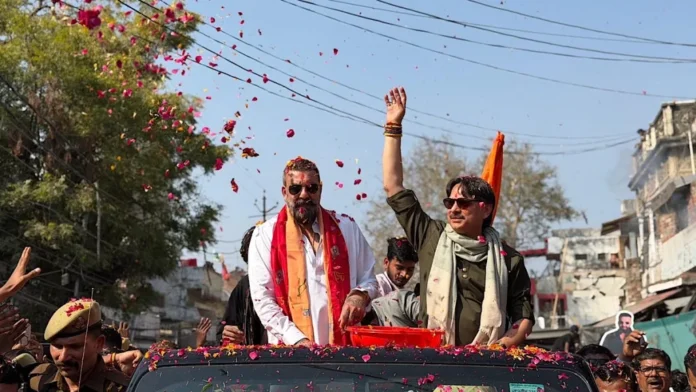
Bollywood actor Salman Khan’s presence at a recent RSS-linked event has triggered political reactions in Maharashtra, with Shiv Sena (UBT) leader Sanjay Raut expressing strong displeasure over the development.

According to reports, Salman Khan attended a public function associated with the Rashtriya Swayamsevak Sangh (RSS), where he was seen interacting with attendees and participating in the event proceedings. Images and videos from the event quickly circulated on social media, sparking debate.

Reacting to the development, Sanjay Raut criticized the move, questioning the actor’s decision to associate with the event. Raut reportedly said that public figures should be mindful of the political and ideological implications of their appearances.

However, supporters of Salman Khan defended his attendance, stating that participation in public or cultural events should not be politicized. They argued that celebrities often attend various events across platforms without endorsing any specific political ideology.

So far, Salman Khan has not issued any official statement regarding the controversy.

The episode has once again highlighted how celebrity appearances at politically linked events can quickly become part of larger political debates.

Further reactions are awaited.

— Reported by Anam Siddiqui

“Am I allowed to speak? Rahul Gandhi vs Speaker row rocks Lok Sabha”.

0
rahul gandhi jpg

“Am I Allowed to Speak?” Rahul Gandhi vs Speaker Row Rocks Lok Sabha

New Delhi, February 11, 2026 — A heated exchange between Congress leader Rahul Gandhi and the Lok Sabha Speaker created uproar in Parliament on Tuesday, after Gandhi questioned whether he was being allowed to speak during proceedings.

The confrontation began when Rahul Gandhi reportedly rose to address the House on a key issue, but was interrupted amid loud protests and procedural objections. Frustrated, he asked, “Am I allowed to speak?” — a remark that quickly intensified the atmosphere inside the Lok Sabha.

Opposition members alleged that their voices were being stifled and accused the Chair of not providing adequate time to present their views. Treasury benches, however, maintained that parliamentary rules were being followed and that disruptions from the Opposition were causing repeated adjournments.

The Speaker urged members to maintain decorum and adhere to House procedures, emphasizing that everyone would get an opportunity to speak as per the rules.

The exchange led to sloganeering and brief adjournment of proceedings, highlighting the continuing tension between the government and the Opposition over floor management and debate time allocation.

Political reactions poured in soon after, with leaders from both sides defending their stance on social media.

Further developments are awaited as the session continues.

— Reported by Anam Siddiqui


Stay connected

0FansLike
0FollowersFollow
0FollowersFollow
0SubscribersSubscribe