
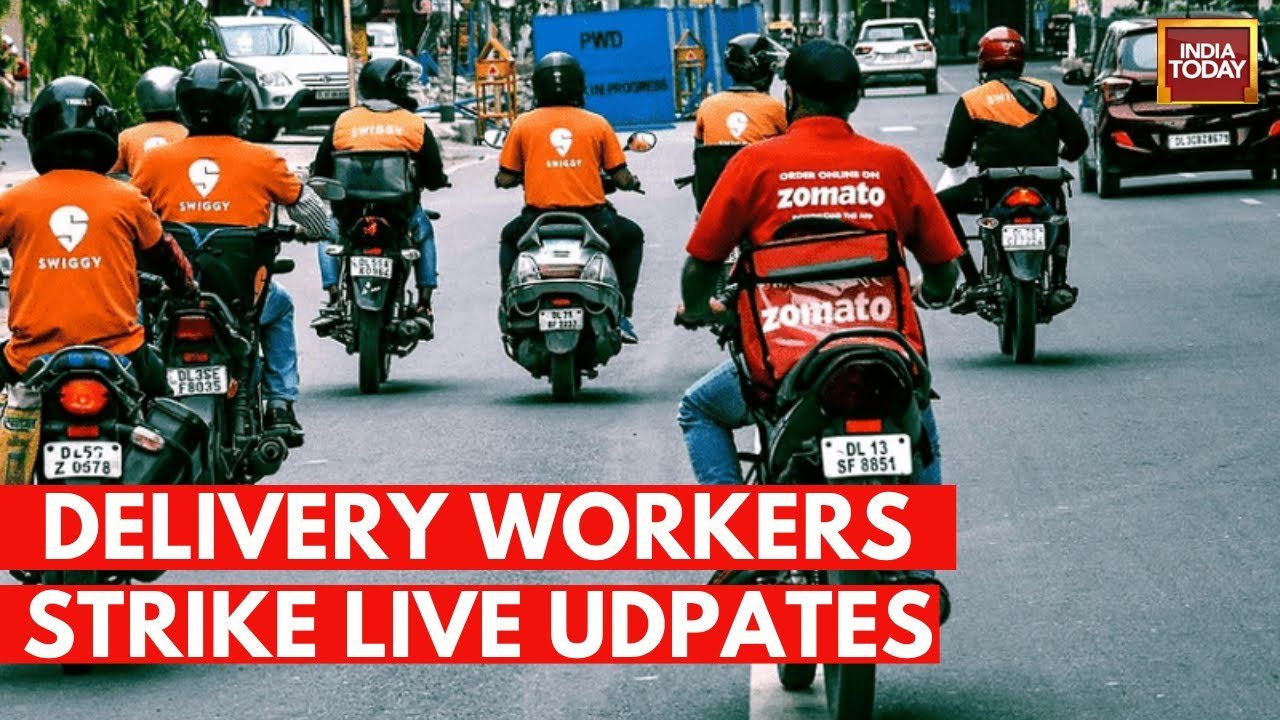
India (Nationwide) — A nationwide strike by gig delivery workers, including those associated with major platforms like Swiggy, Zomato, Blinkit, Zepto and others, has drawn attention across the country amid rising calls for improved working conditions and fair compensation in the platform-based economy. The action, organised by gig workers’ unions, was particularly visible around New Year’s Eve and December 25 protests, when large numbers of delivery partners logged off delivery apps and slowed service operations.
The striking workers have laid out key demands, such as higher per-kilometre pay, guaranteed minimum income, social security benefits, safer work conditions, and an end to pressure for ultra-fast delivery timelines that they argue compromise their safety and earnings.
Unions have pointed to declining pay structures and algorithm-driven targets as major grievances, saying these factors make gig work unpredictable and unsustainable in the long term. Workers also want formal recognition under labour laws to ensure basic protections, insurance and grievance mechanisms.
While the strike gained significant publicity and participation — with tens of thousands of delivery partners involved in flash protests — its impact on actual deliveries varied across cities, and services continued in many areas as platforms increased incentive payouts to encourage workers to remain online.
The action has sparked debate between labour advocates and platform companies, with political leaders condemning the treatment of gig workers and urging platforms to address core issues rather than downplay the protests.
The nationwide gig workers’ strike highlights the growing friction in India’s expanding gig economy, as frontline workers push for dignity, stability and long-term safeguards while continuing to play a critical role in keeping delivery services running.
Reported by Anam Siddiqui.