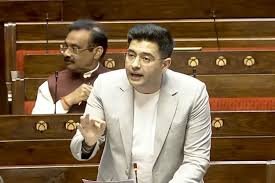
“Public Should Have Right to Fire Leaders” — Raghav Chadha’s Challenge Goes Beyond Elections
Reported by Neha Jaiswal
New Delhi, India — In a notable push for democratic reform, Aam Aadmi Party (AAP) MP Raghav Chadha has called for a fundamental change in India’s political accountability framework by urging that the public should not only have the power to elect their leaders but also the right to remove them mid-term if they fail to perform.
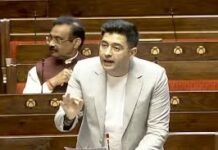
Speaking during the ongoing Budget Session of Parliament, Chadha articulated this idea while advocating for what he described as a “Right to Recall” — a mechanism that would allow voters to “fire” an elected representative before the end of their five-year term. “If voters can hire a leader, they should also have the right to fire them,” he emphasised, noting that accountability must not end with casting a vote.
What Is Right to Recall?
Under Chadha’s proposal, the Right to Recall would enable citizens to initiate a process to remove an MP or MLA whose performance they find unsatisfactory. Currently, Indian voters must wait for the next election cycle to express discontent, even if their representative consistently underperforms or neglects duties. Chadha questioned this status quo, asserting that no other profession allows someone to remain in a role without consequences for continuous non-performance for five years.
He pointed to other democracies where recall provisions exist, arguing that such a mechanism would incentivise elected leaders to remain responsive and accountable throughout their tenure. According to Chadha, more than two dozen countries — including the United States and Switzerland — have some form of recall mechanism.
Safeguards to Prevent Misuse
To prevent hasty or politically motivated recalls, Chadha proposed several safeguards:
-
A minimum period after an election (such as an 18-month cooling period) before a recall can be triggered.
-
A verified petition supported by at least 35–40 % of voters to initiate the recall process.
-
The recall would be limited to cases of serious misconduct, proven corruption, fraud or significant neglect of duty.
-
A final recall vote would need more than 50 % voter backing to successfully remove the representative.
These provisions aim to ensure that the tool is used judiciously rather than as a means of settling everyday political disagreements.
Political Response and Debate
Chadha’s remarks have sparked reactions across the political spectrum. Supporters of the proposal argue that introducing a Right to Recall would strengthen democratic oversight and ensure that elected officials do not “disappear” once polls are over. Many see this as a way to bring greater accountability and responsiveness to public service.
However, some critics within Parliament have cautioned that such a system could lead to instability or frequent disruptions if not carefully implemented. They question whether recall mechanisms might be exploited by political rivals or lead to prolonged campaign cycles.
Looking Forward
Chadha’s call for the Right to Recall has reignited discussion about democratic reforms in India. Whether this proposal will translate into legislation or become part of broader electoral reform debates remains to be seen. What is clear is that his advocacy has put the spotlight on how accountability could evolve in India’s parliamentary system — suggesting that the public’s role in governance might stretch beyond just voting every five years.